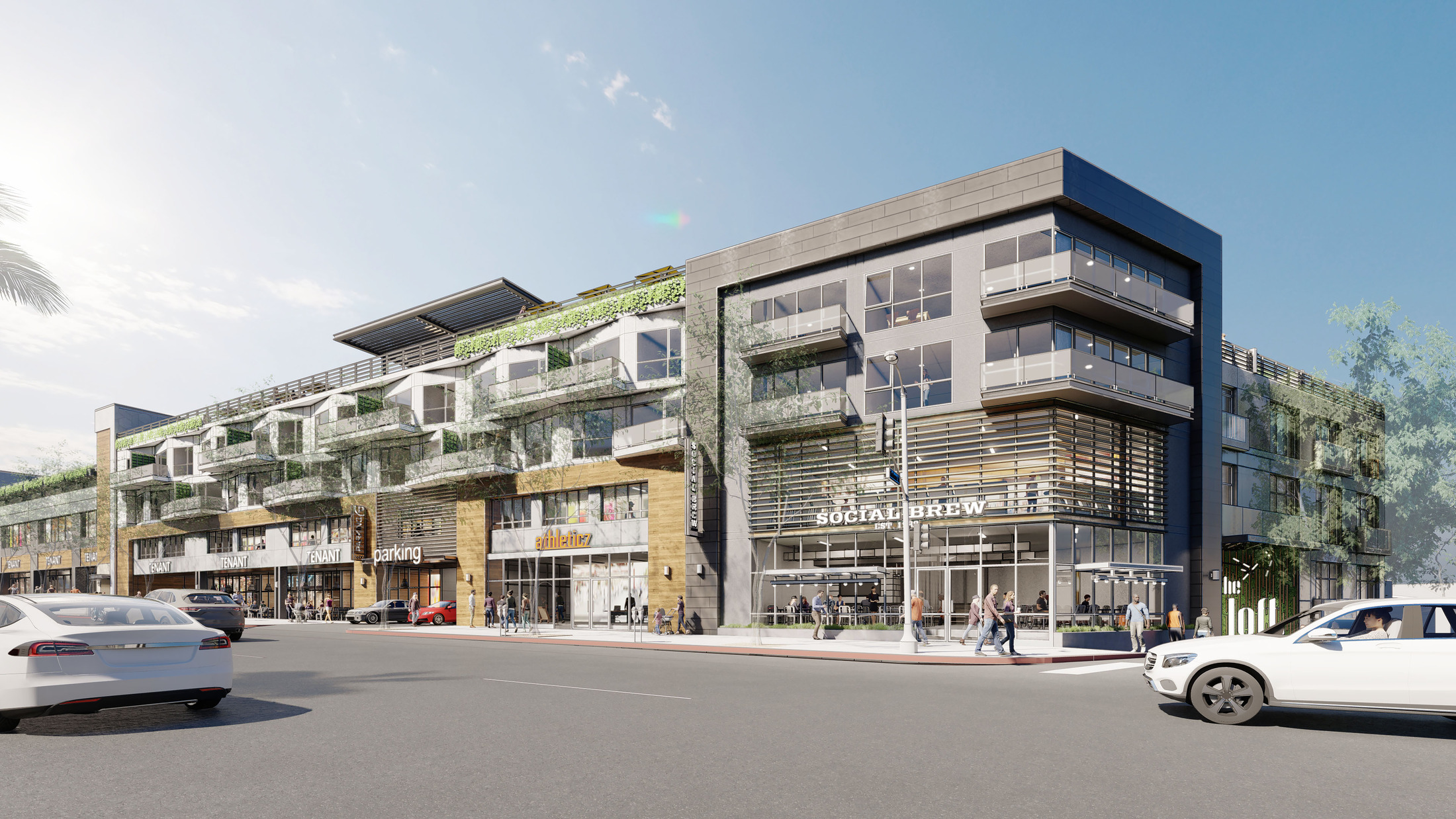
Billings is experiencing a wave of mixed-use development unlike anything in its recent history, with projects along Montana Avenue's arts and restaurant corridor, the downtown core near the Montana Avenue lofts, and the emerging mixed-use density around the RimRock Mall area reshaping a city that has historically been dominated by single-story commercial strip development. Buildings that stack apartments or professional offices above ground-floor breweries, medical offices, and retail bring a level of roofing complexity that Billings contractors are encountering with increasing frequency. The city's position in the Yellowstone Valley, where Chinook winds, extreme temperature swings, and significant snowfall events all converge, makes roofing specification a critical decision rather than a routine one.
Billings experiences some of the most dramatic temperature swings in the lower temperatures from below zero to above 50°F within a single day, creating thermal stress on roofing membranes that exceeds what most climate zone categories anticipate. On mixed-use buildings where the roof assembly spans multiple substrates, structural steel framing over the retail bay, wood framing over upper residential floors, this differential thermal movement is amplified by the different expansion coefficients of each material. Specifying unconstrained membrane attachment methods and adequate expansion joint spacing at structural transitions is essential to preventing the fatigue cracking that Chinook cycling inflicts on rigidly attached assemblies.
Snow management is perhaps the most consequential operational issue for Billings mixed-use buildings. The Rimrock cliff face that defines the city's northern edge channels wind in ways that create significant drift conditions at any roof-level obstruction, parapets, mechanical screens, rooftop amenity structures, and the ground snow load for Billings averages around 20 to 25 pounds per square foot with drift factors that can multiply localized loads by two to three times. Mixed-use buildings in downtown Billings are particularly vulnerable to drift accumulation at the lower roof levels that step down from upper residential floors to retail rooftops, and the structural deck at those transitions must be designed for the drift load explicitly rather than relying on a uniform snow load assumption.
Rooftop amenity spaces are increasingly included in Billings mixed-use projects as developers compete for the professional and lifestyle tenant base that has driven the city's apartment market. Waterproofing a rooftop deck or terrace in Billings requires managing freeze-thaw cycling that is more severe than in most other markets because of the Chinook-driven temperature oscillations that can produce multiple full freeze-thaw cycles within a single week in January or February. Protected membrane assemblies with extruded polystyrene above the waterproofing layer buffer the membrane from this thermal punishment, and the paver or deck system above must be designed with sufficient open joints to allow drainage before ice formation blocks the drain path.
Waterproofing at the commercial-to-residential use transition is a fundamental challenge in Billings mixed-use construction. When a ground-floor restaurant or food hall tenant generates heat, steam, and cooking exhaust that rises through the building system, the roof assembly above must handle the moisture loading while simultaneously managing the cold exterior environment. A vapor retarder positioned above the structural deck but below the insulation layer intercepts the upward vapor drive, but it must be installed without gaps, fishmouths, or lap failures that would allow vapor to bypass the retarder and condense within the insulation layer during Billings's extended cold season.
Montana's building code follows the IBC with state amendments, and Billings's Yellowstone County building department has been enforcing energy code compliance on new commercial construction with increasing rigor as the city's building permit volume has grown. Mixed-use buildings must meet minimum continuous insulation R-values that, in Billings's Climate Zone 6 designation, require R-30 or higher at the roof. Achieving this with polyisocyanurate insulation in Billings means specifying a design R-value high enough to account for the cold-temperature de-rating that polyiso undergoes, typically 15 to 20 percent below its published R-value at extreme cold design temperatures.
Green roofs are less common in Billings than in coastal or Midwest cities, but several mixed-use projects have incorporated vegetated assemblies as differentiating amenities. The primary challenge is selecting a plant palette that survives both Billings's cold winters and its hot, dry summers. The city receives only about 14 inches of precipitation annually, which is insufficient to sustain most green roof plant mixes without supplemental irrigation. Drought-tolerant native Great Plains species, including buffalo grass varieties and low-growing sagebrush relatives, provide better long-term establishment than imported sedums that are not adapted to the intermontane climate.
Multi-stakeholder coordination is a practical challenge on Billings mixed-use buildings because the city's development community is smaller and less institutionalized than in major metro markets. Many mixed-use projects are developed by local or regional investors who are managing their first mixed-use project, which means that the roofing contractor may be the first person on the project to raise questions about maintenance agreements between retail and residential ownership interests, capital reserve allocations, and long-term inspection schedules. Addressing these governance questions at the construction stage, including them in the project's governing documents before the certificate of occupancy is issued, prevents the ownership disputes that arise when a significant repair is needed five years into the building's life.
Long-term maintenance on Billings mixed-use roofs requires a program that specifically addresses the impacts of Chinook wind events, which can lift improperly attached rooftop accessories and stress flashing terminations at parapet walls. Post-wind inspections after significant Chinook events should be part of the maintenance protocol, focusing on parapet cap terminations, equipment screen attachments, and any rooftop amenity features. Billings's commercial roofing contractor base has grown as the city's development activity has increased, and several firms now offer maintenance programs specifically calibrated to the Yellowstone Valley's wind and temperature extreme conditions.
- How do Chinook wind events affect Billings mixed-use roofs?
- Chinook events create rapid temperature oscillations that stress membrane seams through thermal cycling, and the associated high wind speeds can lift improperly fastened rooftop accessories and counter-flashing terminations. Post-event inspections focusing on parapet terminations, equipment screens, and any amenity deck elements should be part of the building's maintenance protocol following significant Chinook events.
- What snow drift loads must be accounted for on Billings rooftops?
- ASCE 7 drift load provisions require that all roof areas downwind of parapets, screen walls, and elevated equipment be evaluated for drift accumulation, which in Billings can be two to three times the balanced ground snow load in sheltered locations. The structural deck at step-down transitions between upper residential and lower retail roof levels is the most common drift accumulation zone and must be specifically designed for those localized loads.
- What insulation R-value is required in Billings's climate zone?
- Billings falls in ASHRAE Climate Zone 6, which requires a minimum R-30 continuous insulation for commercial roofs. When polyisocyanurate is used, the design value must be increased by approximately 15 to 20 percent above the labeled R-value to account for cold-temperature performance de-rating, ensuring that the in-service assembly meets code requirements during Billings's coldest weather.
- Are green roofs viable in Billings's dry climate?
- Green roofs require a plant palette adapted to the intermontane climate's hot, dry summers and cold winters, native Great Plains species like buffalo grass and drought-tolerant forbs outperform standard imported sedum mixes. A supplemental irrigation system is typically required given Billings's 14-inch annual precipitation, and the system should be designed to prevent overwatering that would saturate the growing medium during spring snowmelt periods.
- How should vapor retarders be specified for Billings mixed-use buildings with food service tenants?
- A vapor retarder on the warm side of the insulation layer, directly on the structural deck, is appropriate for Billings's cold-dominant climate. For buildings with restaurant or food hall tenants generating elevated interior humidity, a fully adhered sheet retarder without lap gaps provides the most reliable protection against interstitial condensation, and the installation should be inspected before insulation is placed over it.