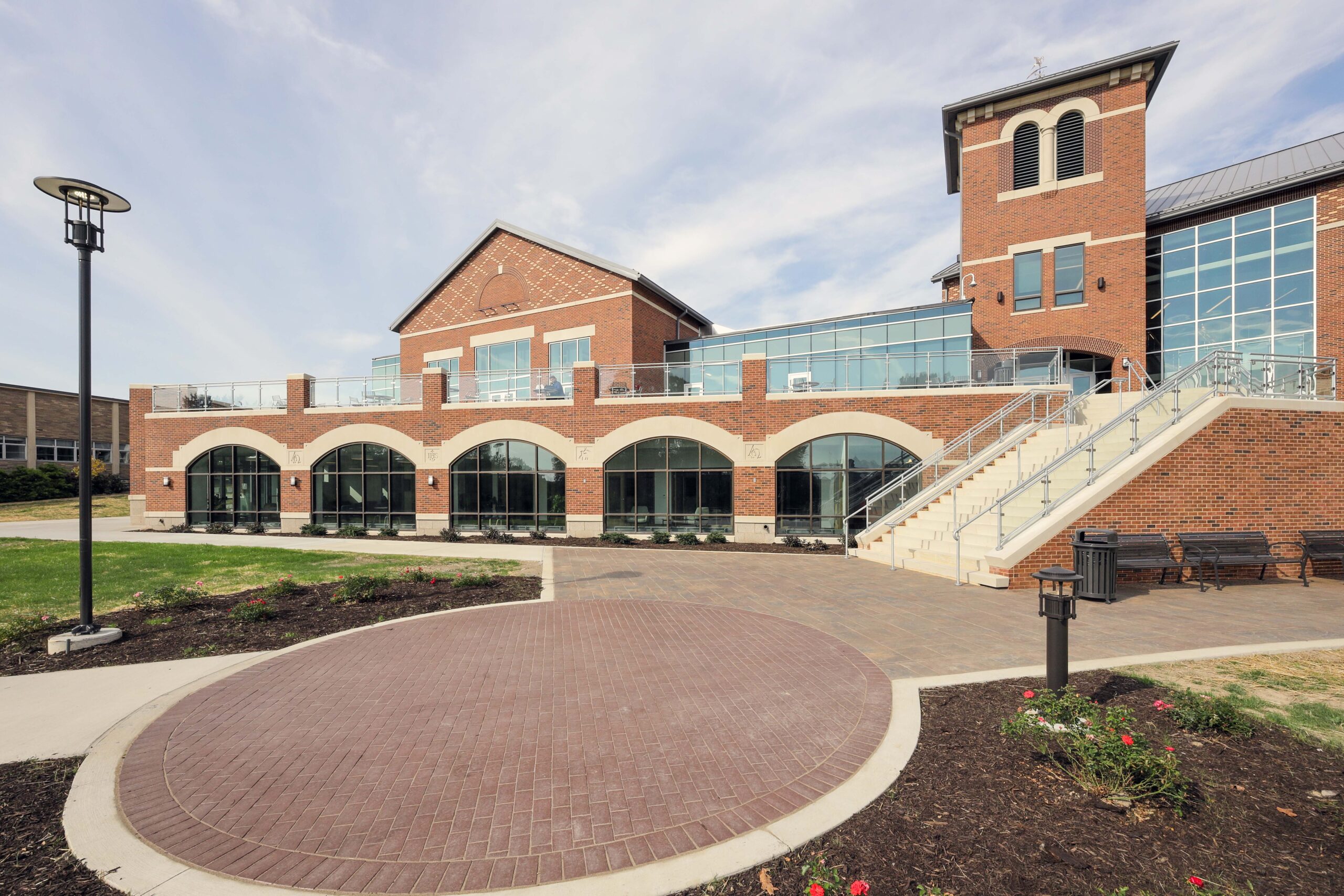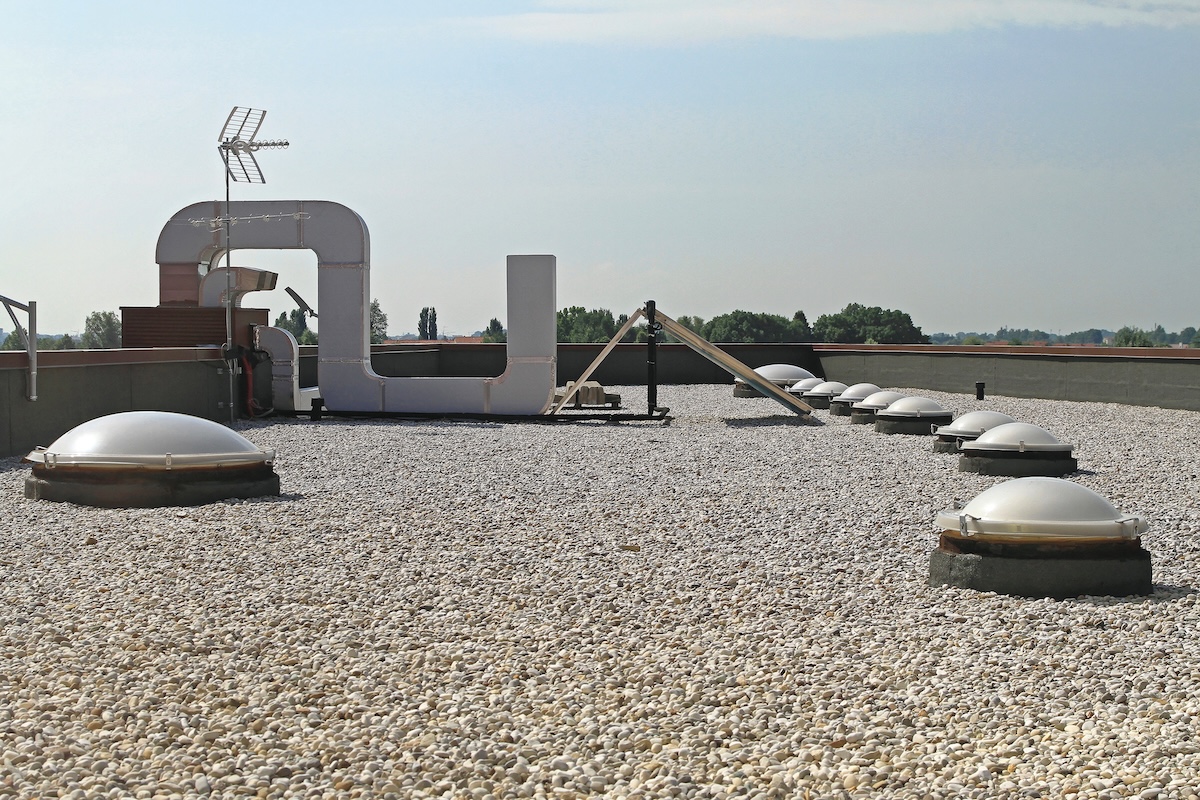
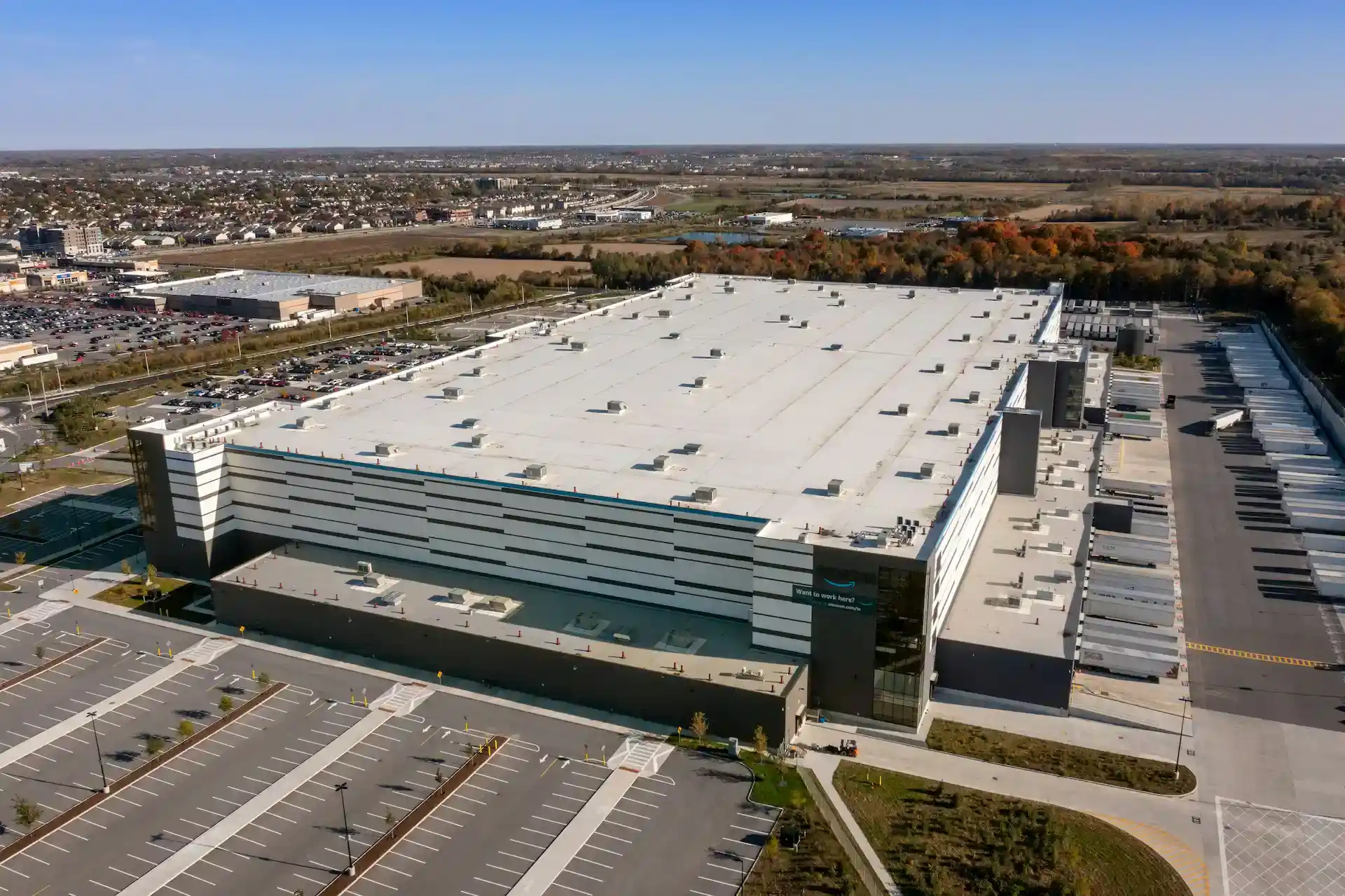
The Amazon fulfillment center on Ponderosa Drive in Billings, Montana sits on the Billings Heights and represents the new generation of high-cube distribution warehouses that have changed commercial roofing demands across the Northern Plains. At over a million square feet of combined footprint across the Billings logistics corridor, these buildings face roofing conditions that their Gulf Coast counterparts never encounter: Chinook winds that cycle a roof from minus-twenty to plus-fifty degrees Fahrenheit within twenty-four hours, ice damming along eave edges, heavy snowpack loads that can reach forty pounds per square foot on the parapet, and the freeze-thaw cycling that destroys improperly lapped membrane seams within two or three seasons.
Drainage design for a large Billings warehouse is dominated by snow and ice management as much as rainfall. The Montana Department of Transportation's snow load maps place Yellowstone County in a ground snow load zone that requires roofing contractors to design for structural deflection under full snow accumulation. Interior drains are preferred over scuppers in this climate because scuppers can ice over and become inoperable precisely when drainage is most needed during a spring thaw. All drain bodies should be specified with electric heat cables in the drain bowl and down the first six feet of conductor pipe, connected to a thermostat set to activate at thirty-four degrees Fahrenheit. Tapered insulation creating a minimum one-quarter-inch-per-foot slope is essential to move meltwater toward those drains before it can refreeze at cold spots.
EPDM has historically been the dominant membrane choice for Northern Plains warehouses, and for good reason. Fully adhered sixty-mil EPDM retains its flexibility at extreme low temperatures, does not become brittle at the minus-twenty readings that Billings sees during January cold snaps, and has a long field performance record in mountain-state climates. TPO is also used successfully in Billings, but only when the contractor specifies a cold-weather-rated formulation and follows the manufacturer's temperature restrictions on welding and lap adhesive application. Standard TPO hot-air welding becomes unreliable below forty degrees Fahrenheit, and contractors who attempt welds in marginal temperatures create seam failures that appear in the spring thaw cycle.
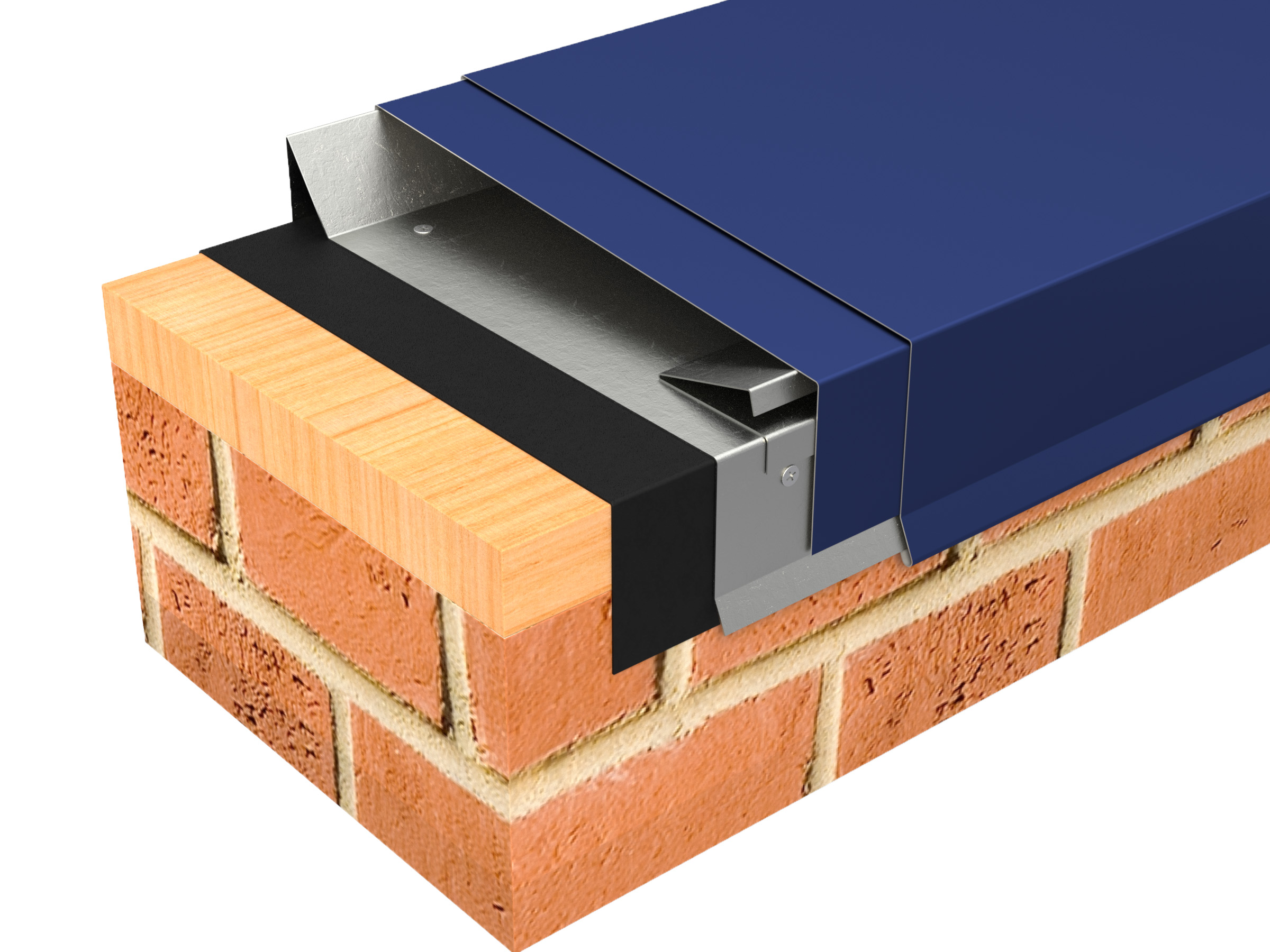
Dock penetrations at Billings logistics warehouses face a unique challenge: the freeze-thaw cycle attacks any sealant joint that is not fully closed. Polysulfide and standard urethane caulks harden and crack at sustained subzero temperatures. The correct approach uses a self-healing silicone sealant rated to minus-sixty Fahrenheit as the primary sealant at all dock canopy attachments, pipe penetrations, and conduit entries, backed by an EPDM pitch pocket or pre-formed boot at every pipe. Sheet metal counter-flashings at dock canopy walls should be fabricated from twenty-four-gauge Galvalume rather than standard galvanized steel, because galvanized coatings chalk and peel in Billings's freeze-thaw and UV combination faster than the building owner expects.
Forklift exhaust fans in Billings warehouses create a condensation problem that does not exist in warmer climates. When a propane forklift vents warm, moist exhaust through a short stack into minus-twenty outside air, the moisture condenses and freezes on the interior of the stack and on the underside of the roof deck immediately around the penetration. Over time this ice formation works into the membrane flashing and creates a moisture pathway. The solution is to extend forklift exhaust stacks a minimum of eighteen inches above the finished roofing surface, install an insulated stack cover rated for northern climates, and ensure the curb flashing detail includes a continuous counterflashing that overlaps the membrane by at least six inches.
Chinook wind events are the structural wildcard for Billings warehouse roofing. A strong Chinook can sustain winds above sixty miles per hour for hours at a time, with gusts exceeding eighty miles per hour on the Rims. These events create both positive pressure on the windward wall and significant negative uplift pressure across the entire roof field. Mechanically fastened systems must be engineered to the wind speed required by ASCE 7 for the specific site exposure category, warehouses on the Heights without significant upwind obstruction often classify as Exposure C, which demands higher fastener densities than contractors accustomed to sheltered urban sites might assume. Perimeter and corner zones require detailed calculations, and the fastener layout should be inspected and documented before any insulation or cover board is installed over it.
Energy efficiency for a Billings warehouse is primarily a winter heat-retention concern rather than a summer cooling concern. Above-deck polyisocyanurate insulation at R-30 or higher dramatically reduces heating costs in a large warehouse that operates at fifty-five degrees Fahrenheit in winter. However, polyiso loses thermal performance at very low temperatures, and some Billings contractors specify a layer of XPS or polyiso with a facer rated for cold temperatures on the lower course to maintain the effective R-value through January cold snaps. Montana's commercial energy code mandates minimum insulation levels for large commercial buildings, and most warehouse re-roofing projects that increase insulation thickness qualify for an exemption from full code compliance only if existing structural members can carry the added dead load.
Scheduling a warehouse re-roof in Billings requires working around both weather and operational calendars. The Amazon fulfillment center and similar large distribution warehouses run at peak volume from October through January. The practical roofing window is late April through September, avoiding the Chinook-wind months of February and March when adhesives and welding materials perform unreliably. Phased section-by-section tear-off is essential, and every exposed deck section must be covered before the afternoon thunderstorm cells that push off the Beartooths during July and August. A daily weather monitoring plan with a two-hour decision window is standard practice among experienced Billings roofing contractors.
Selecting a roofing contractor for a major Billings warehouse means verifying their experience with Northern Plains cold-weather installation protocols, their familiarity with Montana's structural snow load requirements, and their supply chain access to cold-weather-rated membrane materials. Fly-in contractors unfamiliar with the Chinook wind pattern and the Billings frost depth requirements frequently underbid these projects by ignoring the added fastener densities and insulation specifications that local conditions demand. Request references from comparable warehouse projects completed in the Billings market within the last five years and review the manufacturer's warranty carefully for latitude and temperature exclusions.
- What membrane works best for a Billings, MT warehouse roof?
- Fully adhered sixty-mil EPDM is the proven choice for Billings warehouses because it retains flexibility at minus-twenty Fahrenheit. Cold-weather-rated TPO is also acceptable but requires strict temperature controls during installation to produce reliable seams.
- How are snow loads handled on large warehouse roofs in Montana?
- Yellowstone County ground snow loads require a structural analysis for deflection under full accumulation. Interior drains with electric heat cables prevent ice blockage, and tapered insulation creates positive slope to ensure meltwater reaches drains before refreezing.
- What is a Chinook wind and why does it matter for roofing?
- A Chinook is a warm downslope wind that can swing temperatures fifty degrees in hours and sustain sixty-plus mph winds across the Billings Heights. These events produce significant negative uplift pressure across warehouse roofs and demand higher fastener densities, especially in edge and corner zones.
- How should forklift exhaust penetrations be detailed in a cold-climate warehouse?
- Stacks should extend at least eighteen inches above the finished roof surface with an insulated cap to prevent condensation freeze-up. The curb flashing must include a continuous counterflashing with at least a six-inch overlap on the membrane, and silicone sealant rated to minus-sixty Fahrenheit should be used at all joints.
- When is the best time to re-roof a Billings warehouse?
- Late April through September is the practical window, avoiding the Chinook-wind months of February and March. Peak distribution season from October through January conflicts with both weather and operational constraints, so most large projects are phased across the spring-to-fall window.